

Flying a flag is more than just showing colors. It’s a way to express pride, identity, or celebration. Whether it’s in front of your home, school, business, or public building, a flagpole makes a bold and respectful statement. But with so many choices out there, how do you pick the right one?
From material and height to mounting type and location, every detail matters. Some homeowners may focus on appearance, while others need to think about durability in strong winds. Accessories can also make a difference in how your flag flies. In this article, we’ll guide you through the main things to consider so you can make a smart and lasting choice.
Decide Where You Want to Install It

The first step is knowing exactly where your flagpole will go. Do you want it in your front yard, attached to your house, or on a rooftop? Some people prefer ground-mounted poles for their height and visibility. Others choose wall-mounted poles for limited space or easier installation.
Each location has its benefits and challenges. For example, a yard-mounted pole stands tall and proud but may need digging and concrete. A house-mounted pole is easier to install but usually shorter. No matter the type, make sure there’s enough space for the flag to move freely. That’s where accessories like flag pole spinners come in—they help prevent your flag from wrapping around the pole, especially on breezy days.
Also, check for trees, wires, or buildings nearby. You don’t want your flag to get stuck or hidden. The more open the area, the better the flag will fly and be seen.
Pick the Right Height
Flagpole height depends on where you’re installing it and how visible you want the flag to be. For residential homes, the most common height is 20 feet. That’s tall enough to look impressive without overpowering the house. Smaller homes might do better with a 15-foot pole, while large buildings or open areas may need 25 to 40 feet or more.
Height also affects the flag size. A taller pole needs a bigger flag to look balanced. For example, a 20-foot pole usually pairs well with a 3’x5’ flag. Too small and the flag will look lost. Too large and it might be too heavy or flap too wildly in strong winds.
Make sure to follow any local rules or HOA guidelines. Some places limit flagpole height, especially in neighborhoods or shared spaces.
Choose the Right Material
Flagpoles are mostly made of aluminum or fiberglass. Both are strong, but each has different benefits. Aluminum is very popular because it’s durable, lightweight, and has a sleek silver look. It holds up well in different weather and resists rust. You’ll find many commercial and residential flagpoles made of aluminum.
Fiberglass poles are also great, especially in coastal or stormy areas. They’re non-metallic, so they won’t corrode or attract lightning. They’re also flexible, which helps them handle strong winds. Fiberglass poles often come in white, but some are painted in other colors to match your style.
Think about your climate, location, and the look you want. Both materials can last for years, but one might fit your needs better than the other.
Understand the Types of Flagpoles
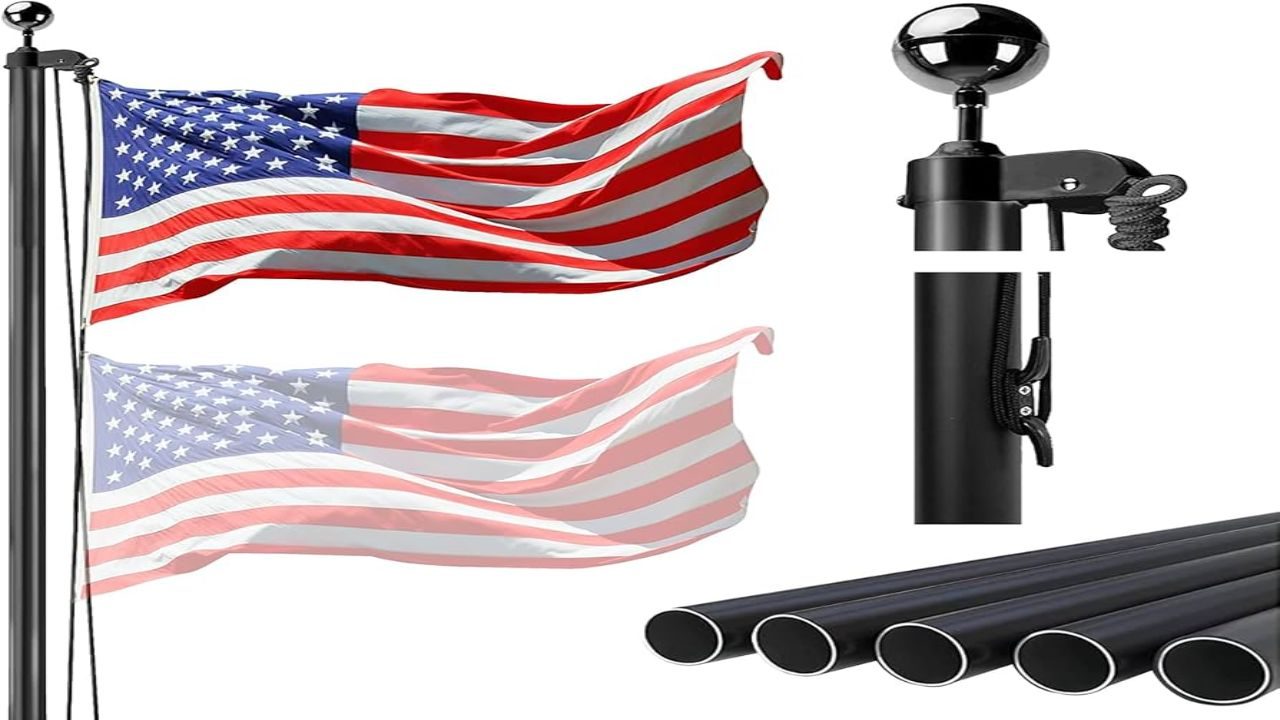
Flagpoles come in several styles. The two main ones are one-piece and telescoping. A one-piece pole is strong, sturdy, and perfect for permanent setups. These are often used in public areas, schools, or businesses. They require more effort to install but offer long-lasting results.
Telescoping flagpoles are adjustable and easy to set up. They come in sections that slide into each other. You can raise or lower the flag easily, and they’re great for residential use. Many homeowners choose telescoping poles because they don’t need a pulley system and are simple to maintain.
There are also sectional flagpoles that are similar to telescoping ones but have fixed sections. Each type has its own pros and cons. If you want something simple and mobile, go for telescoping. For a permanent and formal look, choose a one-piece design.
Think About Wind Speed and Strength
One of the biggest challenges for flagpoles is dealing with wind. If you live in a windy area, you need a pole that can handle strong gusts. Each flagpole is rated for a specific wind speed. This rating tells you how much wind it can take without breaking or bending, especially when a flag is attached.
Always check the wind rating before you buy. A higher rating means the pole is stronger. For example, a pole rated for 90 mph winds is good for normal weather, while 120+ mph is better for coastal or storm-prone areas.
Also, don’t forget that larger flags create more wind resistance. That’s why it’s smart to match your flag size with your pole’s wind rating. Better safe than sorry when the storm rolls in.
Look at Features and Accessories
The flagpole itself is just one part of the setup. Many useful accessories can improve how your flag flies and how easy it is to manage. One key part is the halyard system—that’s the rope or cord used to raise and lower the flag. Some poles have external halyards, which are visible and easy to fix. Others have internal halyards, which are hidden and look cleaner, but cost more.
You might also consider adding a solar light to keep your flag visible at night. Some lights attach to the top of the pole, while others shine from the ground. Lighting your flag is not only beautiful but also respectful, especially for national or military flags.
Don’t forget about finials (the decorative top piece), cleats (where the rope wraps), and flag clips. These small parts help the whole system run smoothly and look finished. Choosing quality accessories means fewer repairs and better flag performance.