
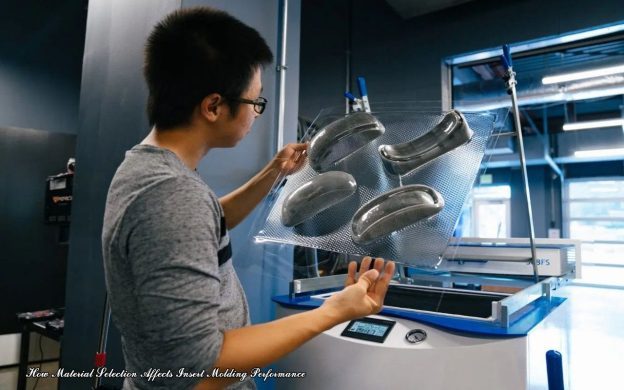
Insert molding looks simple from the outside. A metal insert goes into the mold, resin flows around it, and a finished component comes out ready for assembly. In practice, the material choice behind that process can decide if the part stays tight, stable, and durable for years or starts failing through cracking, warpage, loose inserts, or environmental damage. For manufacturers such as Beyonics, smart choices in Insert Molding Materials help turn a complex molding process into a reliable production method for connectors, housings, fastener points, and precision assemblies.
The biggest mistake is treating the resin as a passive shell around the insert. It is an active part of the system. Its shrinkage, creep resistance, moisture uptake, chemical resistance, flow behavior, and thermal expansion all influence how the finished part performs after molding and during service. That is why strong insert-molded parts rarely come from picking a plastic for price or general availability alone. They come from matching the resin to the insert, the geometry, the process window, and the real use environment.
Performance Starts at the Interface

The first performance battle in insert molding happens at the interface between the insert and the polymer. A good part needs more than basic encapsulation. It needs a resin that flows well around the insert geometry, fills tight corners without hesitation marks or voids, and locks in place without creating excessive molded-in stress. Xometry notes that insert molding depends on precise insert placement and strong bonding conditions, and that the materials must be thermally and mechanically compatible.
That compatibility has direct mechanical consequences. If the resin shrinks aggressively, creeps too much under load, or loses stiffness at service temperature, insert retention can drop over time even when the part looked perfect on day one. This is one reason engineering resins such as PBT, PPS, LCP, reinforced nylons, and high-performance materials like PEEK keep showing up in demanding insert-molded designs. They bring stronger dimensional control, higher heat capability, or better long-term mechanical stability than commodity resins in many applications.
A resin can also fail the job from the opposite direction. Some materials create a stiff grip on the insert at first but turn brittle under impact, thermal cycling, or aging. Others resist impact well but lack the creep resistance needed for threaded inserts or load-bearing terminals. Material selection, then, is less about finding a single “best plastic” and more about balancing retention force, toughness, dimensional control, and processing behavior in one system.
Thermal Mismatch Creates Hidden Stress
Thermal expansion is one of the most common causes of trouble in insert-molded parts, especially when a polymer surrounds brass, copper, aluminum, or steel. Metals and plastics expand at different rates. During molding, cooling, soldering, under-hood use, sterilization, or seasonal temperature swings, that mismatch can load the interface again and again. Celanese’s PPS and LCP design literature puts strong emphasis on dimensional stability and coefficient of linear thermal expansion because these shifts directly affect molded part accuracy and stress levels.
This is where resin family matters. Standard unfilled nylons and many commodity resins expand more than metals, which can build stress around inserts as temperatures move. Reinforced materials can lower thermal expansion significantly, and specialized polymers like LCP can approach the expansion behavior of glass-filled electronic substrates in certain directions. Celanese notes that Vectra LCP offers exceptionally low thermal expansion and very low moisture absorption, helping reduce dimensional change and warpage. Protolabs also points out that glass-filled nylon cuts thermal expansion and improves stability during temperature fluctuation, though it introduces tradeoffs such as brittleness, anisotropic shrinkage, and weaker weld lines.
In real production, this means the “strongest” resin on a datasheet may still be the wrong one if its thermal behavior fights the insert or the assembly around it. A connector body, sensor carrier, or threaded boss can fail from repeated interface stress long before the base material reaches its advertised tensile limit. Engineers who account for thermal mismatch early usually prevent a long list of downstream problems, from cracked corners to loose metal features after heat aging.
Moisture, Chemicals, and Aging Change the Part After Molding
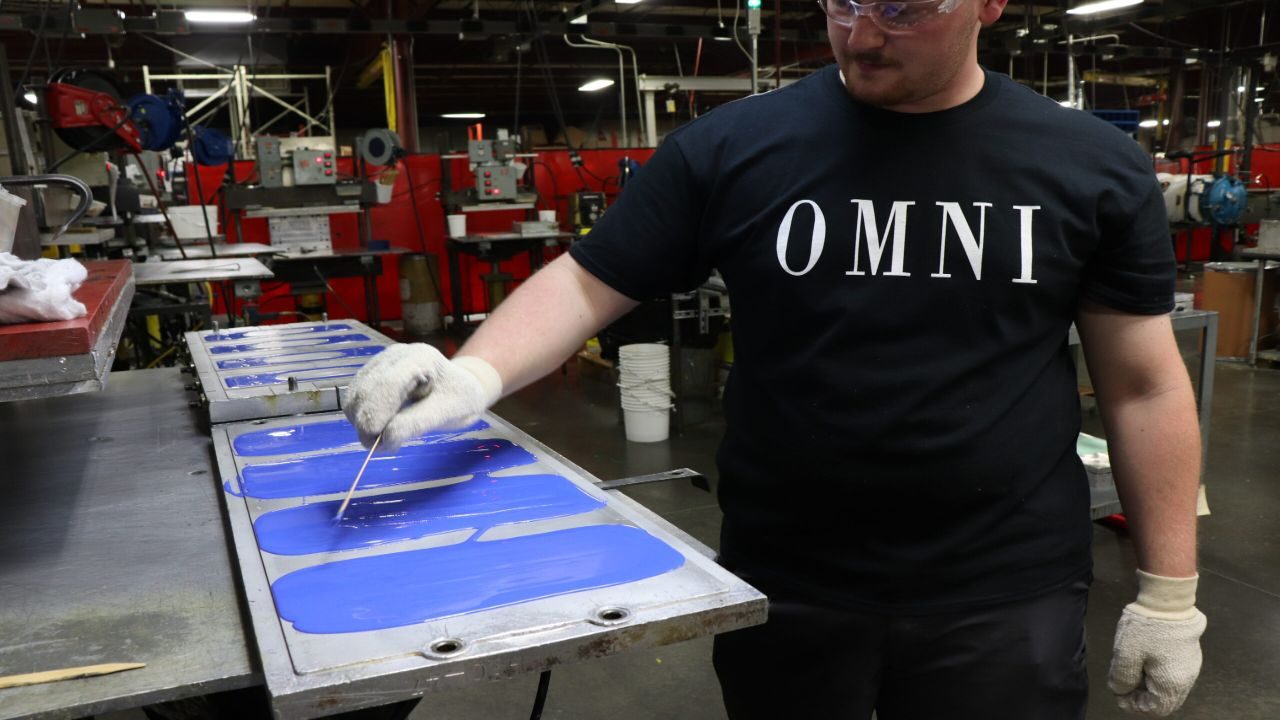
A part does not stop changing when it leaves the press. Moisture absorption can alter dimensions, stiffness, and retention force over time. That matters a great deal in insert molding because even small dimensional shifts can change how the polymer grips the insert or how the overall assembly lines up with mating parts. Celanese highlights low moisture absorption as a major reason PBT and LCP deliver better dimensional stability, while its PPS guide discusses dimensional effects from moisture absorption alongside shrinkage and annealing.
This is one reason PBT remains a strong candidate for electrical connectors, sensor components, and other precision parts exposed to humidity. Celanese describes polyester resins such as PBT as having minimal moisture absorption, good dimensional stability under high humidity, high creep resistance, and strong chemical resistance to oils and greases. In an insert-molded part, those traits help keep the interface more stable across time and exposure, especially in automotive, appliance, and industrial environments.
Chemical exposure adds another filter to material selection. Polycarbonate offers strong impact resistance and dimensional stability, but Protolabs notes its chemical resistance is weaker than many engineers expect. PEEK, by contrast, is widely chosen when the part must tolerate high heat with broad chemical resistance and stable dimensions, though its cost is much higher. So if an insert-molded component will meet fuels, cleaners, oils, weak acids, or sterilization cycles, the chemistry of the resin can be just as important as its strength.
Fillers Solve One Problem and Create Another
Reinforcement often improves insert molding performance, but it always changes the design equation. Glass-filled nylon is a good example. Protolabs notes that adding glass increases hardness, tensile strength, stiffness, creep resistance, wear resistance, and dimensional stability while reducing thermal expansion. Those are valuable gains for parts that need better insert retention and better performance at temperature.
The tradeoffs are real. The same Protolabs guidance warns that glass-filled nylon is more brittle, more abrasive to tools, weaker at weld lines, and more anisotropic in properties and shrinkage. In insert molding, that can show up as cracks near sharp insert features, greater variation tied to flow direction, or processing challenges in tight geometries. A reinforced grade may improve pull-out performance in one design and make another design less robust if the insert shape, gate location, or stress concentration works against it.
That is why filler strategy should follow the failure mode, not habit. If the part struggles with heat and creep, reinforcement may help. If the problem is impact, stress concentration, or fragile weld areas around a metal insert, a tougher unfilled or lightly filled grade may win. Many disappointing insert-molded parts come from solving one issue on paper and creating two new ones in production.
Processing Behavior Decides Bond Quality and Consistency
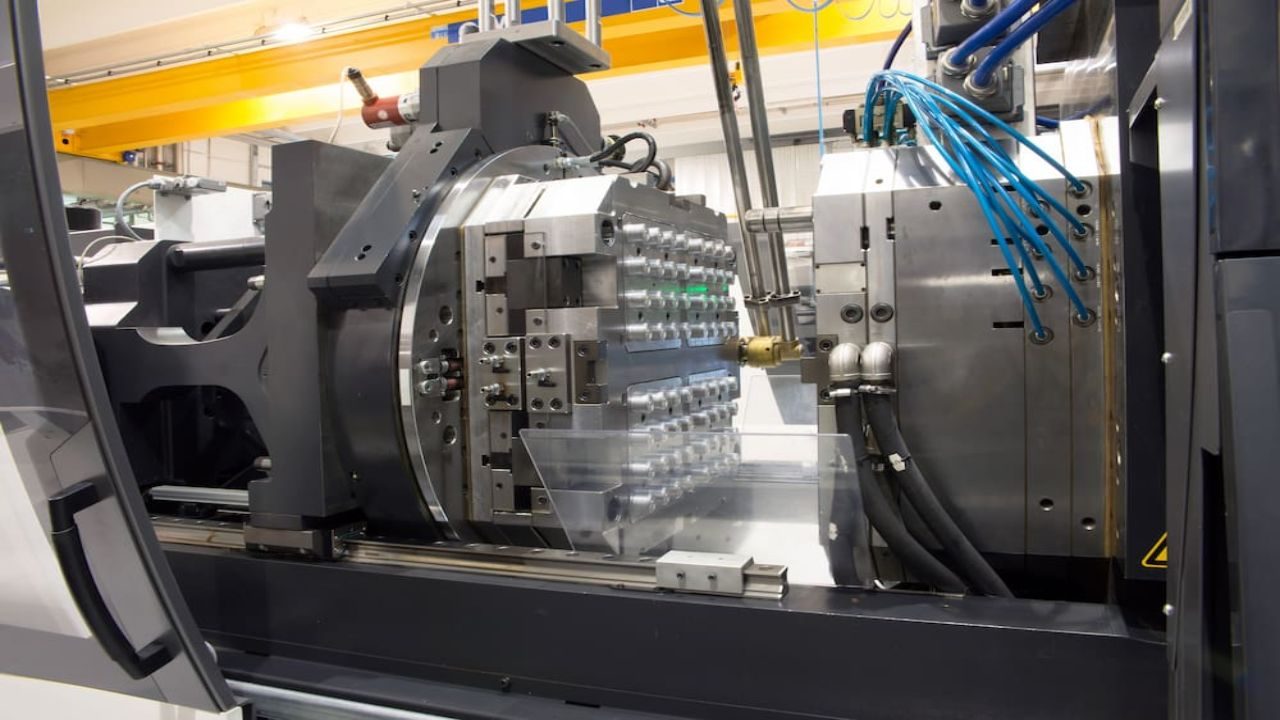
A resin can look perfect on a property chart and still run poorly in the mold. Insert molding asks the material to flow around a solid obstruction, pack evenly, and cool without pulling the interface apart. Melt flow, crystallization rate, shrink behavior, and tolerance to residence time all affect the result. Protolabs stresses that material selection should reflect actual stresses, strains, and environments, while Celanese’s guides repeatedly connect dimensional behavior to processing history, filler content, and molding conditions.
Semi-crystalline resins such as PBT, PPS, and POM can deliver excellent chemical resistance and dimensional performance, but they require disciplined control of shrinkage and process conditions. Amorphous materials such as ABS and PC often offer lower shrink and good dimensional stability, yet they bring other limitations such as weaker chemical resistance or lower heat performance in some use cases. Xometry’s recent material guide frames the decision clearly: mechanical strength, temperature resistance, chemical stability, wear resistance, and surface requirements all need to match the molded part’s real duty.
Insert geometry amplifies these effects. Sharp corners, fine knurls, and poorly designed retention features can concentrate stress and make a good resin look bad. Celanese’s polyester guide specifically recommends radiused insert corners, rounded blind ends, and coarse knurl patterns, and notes that molded-in inserts in polyester resins remain well retained even under thermal and moisture cycling. That is a strong reminder that process, insert design, and resin selection work as one package, not as separate decisions.
The Best Resin Depends on the Job, Not the Category
Different application classes push insert molding in very different directions. Electrical and electronic parts often favor PBT, PPS, LCP, or PPA families because dimensional stability, low moisture uptake, heat resistance, and insulation performance matter as much as strength. Automotive under-hood parts may lean toward reinforced nylons, PPS, or PEEK when heat, fluid exposure, and long-term creep dominate the design brief. Consumer products may choose ABS, PC, or blends when cosmetics, impact resistance, and cost carry more weight.
A useful shortcut is to start with the harshest condition the part will face and work backward. If humidity and tight tolerances are the main threat, low-moisture materials rise on the list. If temperature cycling and metal mismatch are the problem, low-expansion reinforced grades deserve attention. If chemical cleaners or oils drive failure risk, chemical resistance moves to the top. If the insert sees constant clamp load, creep resistance matters more than headline tensile strength. That style of selection is far more reliable than copying a material from a similar-looking part.
The strongest insert-molded programs usually reach good results by testing two or three serious candidate materials early, not by arguing over one favorite resin for too long. That gives the team real data on retention, warpage, cycling performance, moldability, and cost. In insert molding, material selection does not sit at the edge of performance. It sits at the center of it.
A Smarter Material-Selection Process Prevents Expensive Failures
When insert-molded parts fail in the field, the root cause often traces back to a mismatch that was visible much earlier: too much shrink, too much moisture uptake, poor chemical fit, the wrong filler package, or thermal expansion far from the insert and surrounding assembly. Those problems rarely show up clearly in a short prototype run. They tend to surface later, after heat, humidity, load, chemicals, and time start pulling on the interface. That is why material selection deserves the same attention as tool design and insert geometry.
A better process starts with five questions. What loads will the insert carry over time? What temperatures will the part see during molding and service? What fluids, cleaners, or humidity will reach the polymer? How much dimensional movement can the assembly tolerate? What failure would cost the most in the field? Once those answers are clear, material choices become sharper and faster. Then the discussion shifts from “Which plastic do we usually use?” to “Which resin best protects this part from creep, stress, warpage, and retention loss?”
In insert molding, performance is built long before production reaches full speed. It begins with choosing a polymer that behaves correctly around metal, inside the mold, and across the product’s service life. Get that choice right, and the part becomes quieter, stronger, more stable, and easier to trust. Get it wrong, and every later fix becomes more expensive.